

Safeguarding Your Investment: The Imperative of Structural Integrity
Your home’s structural integrity represents its very backbone, ensuring the edifice stands resolute against the forces of gravity, adverse weather, and the passage of time. Any compromise to this fundamental integrity can precipitate a series of unwelcome consequences, ranging from minor cosmetic deterioration to severe safety hazards and a considerable reduction in property valuation. For homeowners across the Northwest, comprehending these risks is particularly pertinent, given our region’s rich tapestry of historic properties, varied geological underpinnings, and often damp climatic conditions.
Ensuring your home’s structural health is paramount for its long-term safety, value, and your peace of mind.
1. Wall Cracks: Differentiating the Cosmetic from the Critical
Cracks are arguably the most frequent and, understandably, anxiety-inducing indicators of potential structural distress. But it’s crucial to appreciate that not all cracks signify a serious problem.
Discerning Cosmetic from Structural Cracks:
Cosmetic (Typically Harmless):
Hairline cracks: Generally less than 1mm in width, commonly observed in plaster, paint, or around door and window frames. These often arise from superficial drying or plaster shrinkage.
Straight, vertical or horizontal cracks: Frequently follow mortar lines and are indicative of minor settlement or material contraction.
Static in nature: They don’t visibly grow or alter significantly over time.
Common Causes: Plaster drying out, recent renovation work, or typical thermal expansion and contraction, which is a prevalent occurrence with seasonal temperature fluctuations across the Northwest.
Structural (Requiring Professional Assessment):
Exceeding 3mm in width: Especially if they’re observed to be widening progressively.
Jagged or diagonal formation: Often traversing through brickwork, mortar, or concrete blocks, rather than merely superficial finishes.
Visibility on both internal and external walls: Indicative of a full-depth defect.
Strategic locations: Concentrated around structural openings such as doors, windows, or corners, suggesting points of undue stress.
Potential Causes: Subsidence, failure of a lintel (the support above an opening), fundamental foundation movement, compromised drainage systems, or intrusive tree root growth.

For instance, in many **Victorian terraces across Manchester**, minor cracks around recently installed double glazing are often cosmetic, while a diagonal crack growing wider than a 10p coin and visible on both sides of a bay window suggests a more serious issue requiring immediate inspection.
Our Expert Approach to Crack Diagnosis & Remediation:
At Guardian Structural Ltd, our process invariably commences with a meticulous, on-site assessment to accurately determine the specific type and underlying cause of the cracking. For any crack identified as structural, we engage in close collaboration with independent structural engineers. This ensures a precise diagnosis and the development of a bespoke, robust repair strategy. Remedial actions may encompass **crack stitching**, **lintel replacement**, expert **repointing**, or, critically, addressing the fundamental cause such as drainage deficiencies or foundation instability.
Accurate diagnosis is the first and most vital step in resolving wall cracks effectively and permanently.
2. Damp: Tackling the Northwest’s Pervasive Property Challenge
Dampness remains a remarkably common issue throughout the Northwest, attributable to our higher average rainfall and the substantial number of older properties constructed without contemporary **damp-proof courses**. It can lead to aesthetic degradation, unhealthy living environments, and, crucially, long-term structural debilitation.
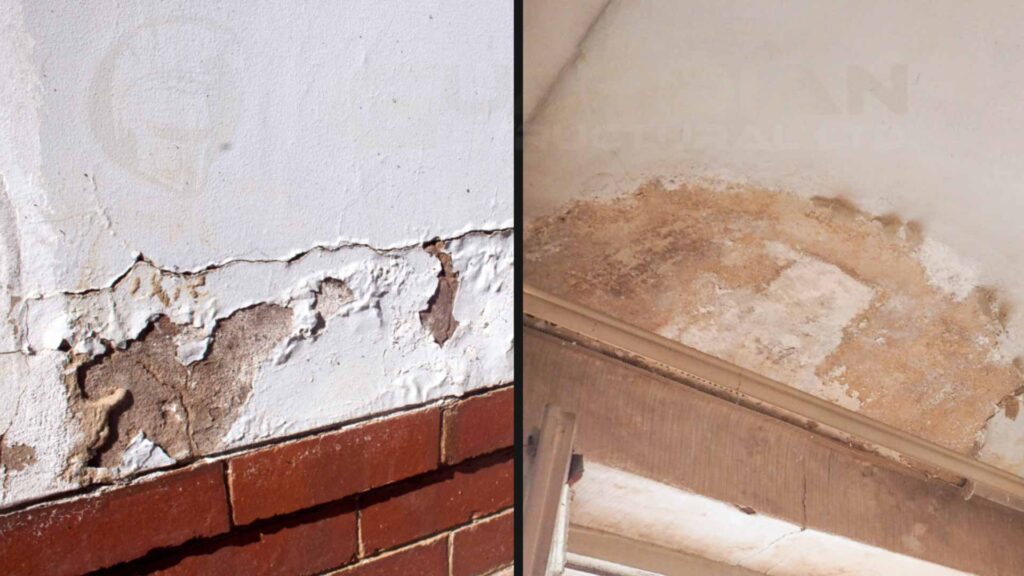
Key Types of Damp Affecting UK Homes:
Rising Damp:
Manifestation: Distinctive “tide marks” on walls, typically extending up to one metre from the floor; crumbling plaster; efflorescent salt deposits; and deteriorating skirting boards.
Etiology: A failed or altogether absent damp-proof course (DPC) allowing ground moisture to be drawn upwards into the masonry via capillary action. This is particularly common in properties predating the 1930s.
Remediation: Installation of a new remedial DPC (typically through chemical injection or the insertion of a physical membrane), removal of affected plaster, and re-plastering with specialist salt-resistant renders.
Penetrating Damp:
Manifestation: Localised damp patches that fluctuate with weather conditions; visible mould growth; and compromised plasterwork.
Etiology: External water ingress stemming from defects such as faulty guttering, cracked rendering, damaged pointing, porous brickwork, leaky pipes, or roof imperfections.
Remediation: Precise identification and rectification of the external source of water ingress, followed by thorough internal drying and redecoration.
Condensation:
Manifestation: The presence of black mould, persistent condensation on windows, and a discernible musty odour, especially prevalent in areas of high moisture generation like bathrooms, kitchens, and poorly ventilated spaces.
Etiology: Warm, moisture-laden air (from cooking, showering, clothes drying) encountering colder surfaces, leading to condensation. This is exacerbated in properties with inadequate ventilation, insufficient heating, or poor insulation.
Remediation: Enhancing ventilation (e.g., installation of effective extractor fans, Positive Input Ventilation (PIV) systems), improving background heating, upgrading insulation, and advising on suitable lifestyle adjustments.
Guardian Structural’s Comprehensive Damp Solutions:
We conduct thorough damp surveys to ensure an accurate diagnosis of the specific type and underlying cause of dampness. Our expert team then implements targeted and effective solutions, from DPC installation and meticulous external building envelope repairs to ventilation system enhancements. This comprehensive approach ensures a consistently dry, healthy, and structurally robust home. Learn more about our full Damp Proofing Services on our website.
Effective damp management is essential for preserving both your property’s structure and indoor air quality.
3. Subsidence: Deciphering the Signs of Ground Movement & Implementing Solutions
Subsidence, which refers to the downward movement of the ground supporting a building’s foundations, is unequivocally among the most severe structural issues a homeowner can face. Prompt detection and professional intervention are therefore paramount.
Key Indicators of Subsidence in Northwest Properties:
Characteristic Cracks: Typically diagonal, noticeably wider at the top, and invariably traversing through brickwork and mortar – a distinct difference from superficial plaster cracks. They often manifest on both internal and external elevations.
Misaligned Joinery: Doors and windows may begin to stick, become difficult to open or close, or exhibit visible gaps around their frames as the surrounding structure shifts.
Uneven Flooring: A discernible slope or unevenness in floors.
Separation of Structures: Visible gaps or pulling away of extensions, porches, or conservatories from the main dwelling.
Rippling Wallpaper: This can sometimes be an early, subtle sign of underlying wall movement before cracks fully develop.
Prevalent Causes of Subsidence in the Northwest:
Tree Root Desiccation: During prolonged dry periods, particularly large trees and dense shrubbery can extract significant quantities of moisture from shrinkable clay soils (which are common in parts of Cheshire and Greater Manchester), leading to ground shrinkage and subsequent foundation drop.
Compromised Drainage: Leaking or fractured underground drains and pipes can wash away supporting subsoil or saturate the ground, precipitating foundation instability.
Adverse Ground Conditions: Properties built upon unstable land, former mining sites (a notable concern in specific areas of Greater Manchester, such as Wigan or Bolton), or areas with poorly compacted infill.
Climatic Extremes: Clay soils are susceptible to expansion when saturated and shrinkage during dry spells, leading to cyclical ground movement.
Our Expert Methodology for Subsidence Repair:
The accurate diagnosis of subsidence necessitates a meticulous investigation, frequently involving trial pits, boreholes, and precise structural monitoring. Guardian Structural Ltd collaborates intimately with specialist structural engineers to conclusively confirm the presence of subsidence and to design the most appropriate and effective remedial works. Our solutions may include:
Underpinning: Extending the building’s foundation deeper into more stable ground. This can involve traditional mass concrete underpinning, piled underpinning, or innovative resin injection techniques tailored to specific ground conditions.
Drainage System Rectification: Repairing or replacing any compromised underground drainage.
Vegetation Management: Professional assessment and, if necessary, strategic pruning or removal of problematic trees (always considered a last resort).
Case Study Spotlight: Discover how Guardian Structural Ltd successfully resolved significant subsidence issues for a homeowner in Altrincham, restoring their property's stability and value. Read the full case study here.
Addressing subsidence promptly and professionally is crucial to prevent further damage and secure your property’s future.
4. Foundation Problems: The Unseen Bedrock of Your Home
Beyond the issue of subsidence, other foundational problems can arise from factors such as age, suboptimal construction, or external influences, leading to structural instability even without significant downward ground movement.
The Fundamental Role of a Robust Foundation:
Foundations are ingeniously designed to uniformly distribute the entire weight of a building into the supporting ground. Any compromise to their inherent integrity can lead to uneven settlement, subsequent cracking, and a generalised structural weakness throughout the property.
Indicators of Foundation Distress (Beyond Subsidence):
Bulging or Leaning Walls: Suggestive of lateral movement or undue pressure exerted upon the foundations.
Springy or Uneven Floors: Could indicate issues with sub-floor support or the integrity of floor joists directly affected by foundation deficiencies.
Extensive, Spreading Cracks: Particularly noticeable in basement walls or concrete slab floors.
Dampness or Water Accumulation: Within basements or crawl spaces, signalling compromised foundation waterproofing.
Guardian Structural’s Foundation Repair Services:
We provide comprehensive and lasting solutions for a diverse range of foundation issues, often working in close conjunction with geotechnical experts. Our services include:
Underpinning: As detailed previously, to extend foundations to more stable strata.
Foundation Reinforcement: Strengthening existing foundations with additional concrete or structural elements.
Waterproofing (Tanking): Application of specialist membranes and the installation of effective drainage systems in basements and sub-structures to prevent water ingress.
Crack Repair & Sealing: Addressing and sealing cracks within concrete foundations or basement walls.
A sound foundation is the silent guarantor of your home’s enduring stability.
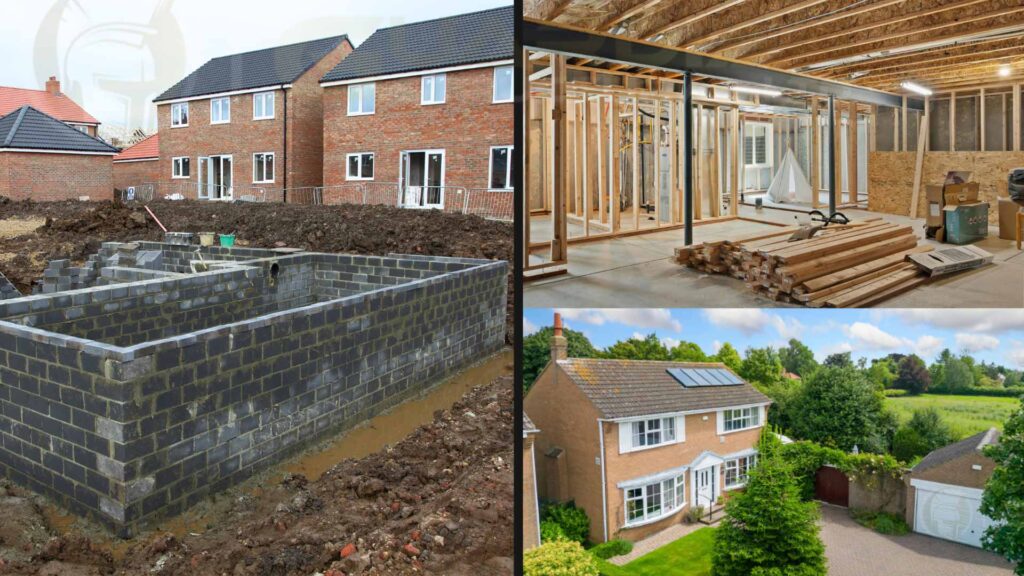
When to Engage a Professional: Guardian Structural Ltd’s Unwavering Commitment
Attempting to self-diagnose or undertake repairs for structural issues can be perilous, costly, and may even invalidate your home insurance. Professional assessment is not merely advisable; it is unequivocally crucial for the safety, longevity, and ultimate value of your property.
The Indispensable Value of Professional Assessment:
Accurate Diagnosis: Structural problems frequently possess intricate and interconnected causes. Only seasoned professionals, often in collaboration with qualified structural engineers, possess the expertise to precisely identify the root issue.
Ensuring Safety: Undertaking work involving foundations, load-bearing walls, or significant damp remediation presents inherent hazards without the requisite equipment, knowledge, and adherence to stringent safety protocols.
Regulatory Compliance: All major structural alterations and damp-proofing works are subject to rigorous UK Building Regulations. Employing professional builders ensures your project not only meets these legal stipulations but also secures the necessary sign-offs, circumventing potential future complications or issues during a property sale. For more detailed information, see our guide on Navigating Planning Permission & Building Regulations in the Northwest.
Insurance & Mortgage Requirements: Many insurance policies mandate professional remediation for structural claims. Furthermore, prospective buyers and their mortgage lenders will invariably require documented proof that any structural work was executed to standard, complete with all appropriate certifications.
The Guardian Structural Ltd Advantage: Your End-to-End Project Partner
At Guardian Structural Ltd, we take immense pride in offering a truly holistic and entirely stress-free solution for homeowners across Greater Manchester, Warrington, and Cheshire. We don’t simply execute the repair work; we meticulously manage the entirety of your project:
Initial Consultation & Thorough Site Visit: A comprehensive initial assessment to fully comprehend the nature and extent of the problem.
Expert Diagnosis & Design: Collaboration with trusted, independent structural engineers where detailed analysis and solution design are required.
Regulatory Management: Navigating the complexities of planning permission liaison (where applicable) and ensuring all works scrupulously adhere to stringent Building Regulations, securing necessary approvals from local authority Building Control departments.
Comprehensive Service Integration: Our extensive in-house expertise spans beyond core structural work to seamlessly include electrical installations, plumbing and heating systems, general renovations, and professional window & door installations. This comprehensive capability ensures we can address every facet of the repair and subsequent reinstatement, providing you with an unparalleled, cohesive project experience.
Exemplary Workmanship: Our experienced, highly qualified, and locally attuned team consistently delivers safe, durable, and exceptionally high-standard results.
Transparent Communication: We commit to keeping you thoroughly informed at every stage, from the initial, detailed quotation right through to project completion.
Do not permit structural concerns to compromise the safety or intrinsic value of your most significant asset. Take the decisive step to protect your investment.
Frequently Asked Questions (FAQs)
A: The precise cost of subsidence remediation varies considerably, being contingent upon the severity, underlying cause, and the specific method of repair employed (e.g., underpinning, resin injection). Costs can range from several thousand pounds for minor issues to a significantly higher sum for complex cases. We will provide a comprehensive, no-obligation quotation following our thorough assessment.
A building surveyor provides a broad-spectrum assessment of a property’s overall condition, identifying defects and offering advice on maintenance. A structural engineer, in contrast, is a specialist focused solely on a building’s structural integrity, performing intricate calculations and designing solutions for load-bearing elements, foundations, and stability issues. For suspected structural problems, both professionals may be involved, with the engineer typically providing the detailed design for the remedial works.
Yes, it is certainly possible. However, it’s absolutely vital that any historical subsidence has been professionally diagnosed, comprehensively remediated, and fully signed off by local authority Building Control. All pertinent documentation, such as structural engineer’s reports and guarantees for underpinning, must be meticulously retained. This robust paperwork provides crucial assurance to prospective buyers and their mortgage lenders.
A chemical damp-proof course (DPC) is generally expected to have an effective lifespan of 20-30 years, and often comes with a long-term guarantee from the installing company. Its continued efficacy, however, is reliant upon correct initial installation and the adequate resolution of any other underlying causes of damp.
A: Generally, purely remedial structural repairs (such as underpinning or crack stitching) are classified under “permitted development” and typically don’t require full planning permission. However, they *invariably* necessitate Building Regulations approval, meaning you must formally notify your local authority’s Building Control department. If the repairs form part of a larger project, such as an extension or significant alteration, then planning permission may also be a prerequisite. We will expertly guide you through all required approvals.
Secure Your Home’s Future: Contact Guardian Structural Ltd Today
Your home represents your most significant asset. Ensuring its structural integrity isn’t merely about executing repairs; it’s about safeguarding your family’s future and meticulously preserving your investment for generations to come.
If you’ve observed any of the warning signs discussed within this definitive guide, we urge you not to delay. Contact Guardian Structural Ltd today for unparalleled expert advice, a comprehensive assessment, and a clear, professional pathway to resolving your structural concerns. We are your trusted, local partners for a safe, secure, and resilient home across the thriving Northwest.


